
Just because cats do drink dairy doesn’t mean they should, says Cailin Heinze, a board-certified veterinary nutritionist. Cats are actually lactose intolerant – meaning their systems are not able to properly process the lactose find in milk, which results in digestive upset. “Lactose is a sugar, and undigested sugars cause diarrhea, bloating and flatulence,” Heinze says. So while Fluffy may like to drink milk, the aftereffects are often undesirable for both you and your cat.
Another reason not to give your cat cows’ milk is because it’s full of fat, which is why they like the taste so much! A saucer of milk for your cat is like you eating an entire 12 inch pizza.
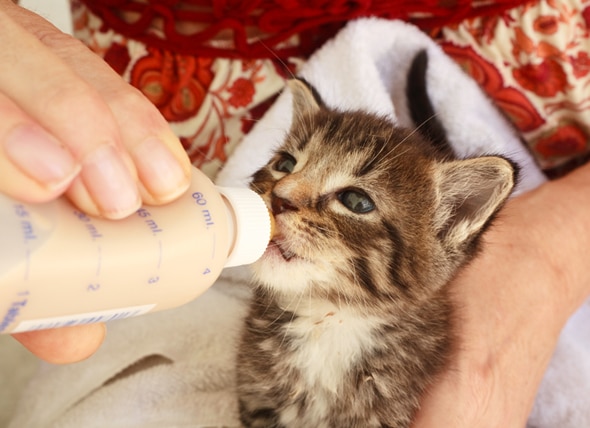
This is especially important during “kitten season”, when so many orphan babies are found. They need to be bottle fed, but no dairy milk. Also, soy milk, almond or other nut mills are not healthy choices – they do not provide the proper amino acids and the kittens will become malnourished. You can find pet formula at pet stores. Look for KMR powder milk replacements at pet stores or liquid kitten milk.
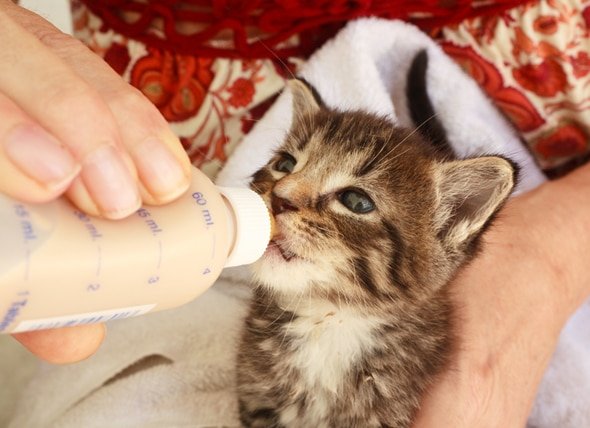
Most kittens need to be nursed by their mother or fed kitten formula from a bottle until 4-5 weeks of age; however, this isn’t a hard and fast rule. Weaning can take place later if a kitten is underweight or ill, and it is important to use your best judgement when weaning.
If a kitten starts to lose weight, stops eating or is acting more lethargic than normal during the weaning process, go back to feeding kitten formula for another 3-5 days before trying weaning again.
In most cases, you can tell when a kitten is old enough to be weaned when you see baby teeth emerging from the gums. The best way to start is to offer a slurry of canned or dry commercial kitten food that is soaked in kitten formula.
Eventually, you can place the mush in a cat bowl with low sides, and prepare to get messy! Kittens who are learning to eat food are just as messy as toddlers who are learning to feed themselves, so put newspaper down to keep the mess contained.
Kittens will walk through their food, paw their food and get it everywhere. Over time—anywhere from a week to 10 days—increase the amount of canned or dry food in the slurry and reduce the amount of kitten formula until the kitten is completely weaned.
You can also offer dry food at the same time to let the kitten get used to the texture and flavor, but it is likely that the kitten will get the bulk of his or her calories from the slurry that you are making until the kitten is fully weaned.
References
Sarah Wooten, DVM https://www.petmd.com/author/dr-sarah-wooten
 Crosby and Buddy - Tails of Two Kitties